
Can Factory-Built Housing Deliver Better Property Investment Returns?
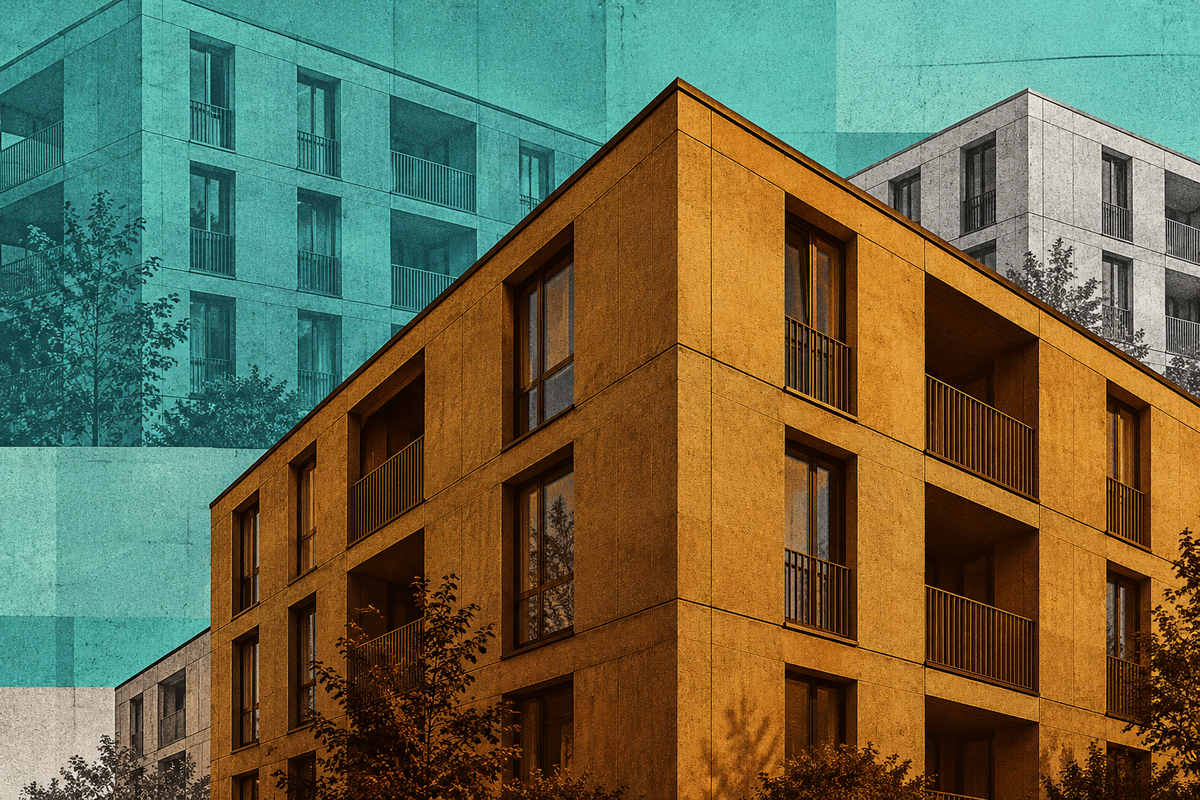
Stuttgart’s municipal housing company is developing apartment buildings at approximately 30 percent below conventional construction costs using a standardised building system from Swiss-owned Nokera. Four buildings have already been completed, each containing six apartments on a compact plot measuring twelve by twelve metres. Further developments are planned across the city, where the shortage of suitable land has made conventional residential construction increasingly expensive.
Stuttgarter Wohnungs- und Städtebaugesellschaft (SWSG) developed the EQ12 concept with Nokera to add homes within established neighbourhoods. The three-storey buildings contain apartments of approximately 36–52 square metres, aimed primarily at smaller households, and use heat pumps and rooftop photovoltaic panels. SWSG plans around 200 apartments across seven locations, repeating the same basic design rather than commissioning an entirely new building for every plot.
Nokera manufactures timber-based building components at its factory near Magdeburg, where automated machinery produces elements that construction teams assemble on site. The factory approach reduces the work carried out outdoors, while standardised layouts allow architects, engineers and suppliers to reuse specifications across projects. SWSG attributes its reported cost savings to this combination of industrial production, compact floor plans and the removal of expensive building features.
The Stuttgart figures offer an unusually concrete reference for residential investors assessing industrialised construction. They describe the cost of delivering a particular building design, however, rather than the total cost of acquiring a property or the returns generated once tenants move in. Land, foundations, utility connections and financing remain part of the development budget, while the rental income depends on the apartments and the local market.
Manufacturing Buildings at Scale
Nokera has applied its construction system to larger residential developments. In Mannheim, the first phase of a project delivered 167 apartments, with construction completed in October 2024. The development was recognised by the German property industry after reporting building costs approximately 30 percent below those of comparable conventional construction.
Producing components repeatedly allows Nokera to spread engineering and design work across multiple projects. Manufacturers also purchase materials in larger quantities and organise production around established specifications, reducing the time spent adapting individual elements. Factory workers complete much of the work under controlled conditions, while contractors prepare foundations and infrastructure on site.
A conventional development requires numerous trades to work through successive stages of construction. Structural work precedes much of the installation and interior finishing, with progress dependent on weather, deliveries and the availability of contractors. Prefabrication allows more of those activities to proceed simultaneously, although the amount of work transferred to the factory varies between construction systems.
The savings depend partly on how consistently developers use the standardised design. Altering apartment layouts, adding bespoke features or adapting buildings to difficult sites increases engineering and production costs. Nokera’s system is therefore best assessed against developments with similar requirements, rather than against residential buildings of substantially different size or specification.
Factory production also changes the financial position of the contractor. Machinery, production facilities and specialist employees create fixed expenses that continue when orders slow. Manufacturers need a sufficiently large and predictable pipeline of projects to maintain efficient production, while developers depend on their ability to deliver components at the agreed cost and quality.
A property investor commissioning several buildings through one supplier acquires exposure to that supplier’s operational performance. The assessment needs to cover its financial position, production capacity, order book and contractual obligations, particularly where the building system uses components that are difficult to obtain elsewhere.
Construction Time and the Cost of Capital
The period between purchasing a development site and receiving the first rental payments has a direct bearing on property returns. Developers commit capital to land, design, foundations and construction long before a completed apartment produces income, while interest accumulates on borrowed funds.
Factory manufacturing reduces part of that interval by allowing production to proceed alongside site preparation. Once the foundations are ready, contractors assemble the prefabricated elements and complete the remaining work. The financial benefit comes from reducing the overall development period, rather than simply erecting the structural frame more quickly.
Planning approval, demolition, ground conditions and utility connections remain potential sources of delay. A developer whose modules are ready for delivery still needs a site capable of receiving them, and a completed building produces no rent until the necessary approvals are secured and tenants take possession.
The payment schedule also influences financing costs. Some manufacturers require substantial deposits or payments during production, bringing forward expenditure that conventional contractors might invoice later. Investors need to compare the timing of all payments with the dates on which completed units become available for occupation.
Earlier delivery becomes particularly attractive for developers undertaking a series of projects. Rental income begins sooner, construction loans are outstanding for a shorter period and equity tied up in one development becomes available for another. Those benefits depend on actual completion dates, occupancy and the terms of the financing agreement.
A shorter programme is especially valuable when construction finance is expensive, although a developer holding land through a lengthy planning process will see fewer savings from reducing the building phase alone.
The Limits of Construction-Cost Savings
The Stuttgart and Mannheim projects demonstrate the savings achievable on selected developments, but residential property values are shaped by more than the price of the building.
Investors must purchase or control the site, obtain permission to develop it and pay for connections to local infrastructure. In dense urban areas, land accounts for a large share of total investment, reducing the proportion of the budget affected by cheaper construction.
The completed apartments must also compete in the rental market. Standardised layouts work well where they match tenant demand, as Stuttgart’s smaller homes are intended to do. A comparable building in a location where tenants expect larger apartments, parking or additional amenities may generate less income, regardless of the savings achieved during construction.
A development budget therefore needs to distinguish the building package from the entire cost of bringing the property into use. Foundations, drainage, landscaping, access roads, professional fees and local infrastructure requirements vary between sites, while transport and assembly costs depend on distance, access and the size of the prefabricated elements.
Operating expenses enter the calculation once the apartments are occupied. Energy consumption, maintenance, repairs and the replacement of specialised components affect the income retained by the property owner. Investors commissioning buildings intended to remain in their portfolios for decades need evidence of durability and the availability of independent maintenance providers.
A lower construction price produces a stronger return when the completed building delivers comparable rental income, operating costs and market value. Where standardisation reduces usable space or limits the property’s appeal, some of the initial saving is offset by weaker income.
Nor do savings on individual projects establish the profitability of the manufacturer. Nokera’s factories require sustained production volumes, while the economics of a residential investment depend on the price paid by the developer and the performance of the finished property. The two businesses carry different costs and risks.
Switzerland’s Residential Development Market
Swiss developers face similar pressure to deliver housing more efficiently, although the economics differ from those in Germany. Land is scarce in major urban centres, construction remains expensive and planning requirements limit the speed at which developers add new accommodation.
The Federal Statistical Office recorded 48’455 empty dwellings on 1 June 2025, equivalent to a national vacancy rate of 1 percent. It was the fifth consecutive annual decline, with particularly limited availability in several urban markets.
Higher construction prices have added to the pressure. The Federal Statistical Office’s Construction Price Index rose by approximately 1 percent over the twelve months to April 2026, increasing the cost of new projects and renovation work.
Research commissioned by the Federal Office for Housing and conducted by ETH Zurich found that new residential construction in Switzerland’s five largest metropolitan areas increasingly takes place within existing settlements. Developers are replacing older buildings, adding storeys and converting industrial or commercial land as opportunities for construction on undeveloped plots diminish.
Industrialised construction fits some of these projects, particularly where owners can repeat compact designs across several sites. The EQ12 buildings in Stuttgart illustrate how a standardised apartment block can occupy a relatively small plot without requiring a large residential scheme.
Swiss property owners must nevertheless account for local building regulations, labour costs, transport and the requirements of individual municipalities. Imported prefabricated components do not automatically produce the savings reported in Germany, especially when buildings require extensive adaptations.
The high value of development land also changes the calculation. A 30 percent reduction in the cost of constructing a building has a smaller effect on total investment when much of the capital is committed to acquiring the site.
These factors favour a project-by-project assessment rather than applying German construction savings across a Swiss residential portfolio. Repetition offers the greatest potential where several buildings share similar technical requirements and local planning authorities permit the proposed designs.
Opportunities Within Existing Property Portfolios
Owners of residential portfolios have an advantage over developers that must acquire a new site for every project. Existing holdings may contain land suitable for additional buildings, extensions or replacement developments, allowing investors to increase rental accommodation without entering the market for an entirely new property.
Stuttgart’s approach is instructive because the municipal housing company is using standardised buildings on multiple infill sites. The EQ12 design gives the developer a common starting point for evaluating construction costs and apartment layouts, while site-specific adjustments remain necessary.
A Swiss family office with residential holdings might identify comparable opportunities through a review of development rights, unused land and the physical condition of existing buildings. Some properties will support additional accommodation; others will face restrictions on density, access, parking or neighbourhood character.
The investment appraisal must account for the value of land already owned. Although the owner has no new acquisition expense, using that land for development carries an economic cost because it may have an alternative use or market value.
Additional rental income then has to justify the construction budget, financing expenses and any disruption to existing tenants. Extensions or infill buildings may also require temporary changes to access, parking and shared facilities, affecting the operation of the existing property.
Commissioning several buildings under a common specification offers opportunities to negotiate purchasing terms and reduce repeated design expenses. The benefit is less certain for owners seeking to add one small building to a site with unusual technical requirements.
Institutional property managers and real-estate funds face similar considerations. Investors evaluating their development programmes need evidence that industrialised construction has improved final budgets and completion dates, supported by operating figures from completed properties.
A factory-built project completed within budget offers an encouraging reference. Its value to a property portfolio becomes clearer after the owner has established rental income, maintenance expenditure and the market valuation of the finished building.
Assessing the Investment Return
Nokera’s experience in Stuttgart and Mannheim provides evidence that standardised construction can reduce the cost of delivering residential buildings. Both projects report savings of approximately 30 percent against conventional comparisons, although the figures reflect their particular designs, specifications and development arrangements.
The resulting investment return depends on a wider set of figures. A developer needs to know how much capital the complete project will absorb, when tenants will begin paying rent and what the property will cost to operate. A prospective buyer also needs to establish the income available relative to the purchase price.
Public housing providers pursue objectives that differ from those of private landlords. SWSG’s commitment to affordable accommodation influences its apartment designs, financing arrangements and rental expectations, making a direct comparison with commercial residential developments incomplete.
Swiss investors examining factory-built housing have to establish whether the method produces savings under Swiss planning and construction conditions. Shorter programmes and repeatable designs offer potential advantages, particularly in urban infill projects, but the value of the land and the income generated by the completed apartments remain central to the calculation.
The most persuasive evidence will come from developers able to provide final construction accounts, actual completion dates and operating results across several comparable projects.
1. Compare the full development cost. Request separate figures for the building package, land, foundations, connections, transport, installation, professional fees and contingencies. A factory quotation is only one part of the project budget.
2. Check when rental income begins. Compare planning, site preparation, construction and handover schedules with those of a conventional development. Review payment dates as well as completion dates to establish the financing benefit.
3. Test the apartments against local demand. Examine layouts, usable space, expected rents and comparable accommodation. Savings achieved through smaller or standardised designs need to be assessed alongside the income those apartments generate.
4. Review the manufacturer and building system. Check financial strength, production capacity, warranties, maintenance arrangements and the availability of replacement components. Establish the consequences of delays or supplier failure.
5. Calculate returns from the completed property. Compare total invested capital with net rental income, financing costs and expected market value. Use actual results from completed developments wherever possible.