Green Infrastructure Investments
Green infrastructure is attracting capital on a scale that would have been difficult to imagine a decade ago. Global investment reached an estimated $600 billion in 2022, as governments and private investors sought to expand clean energy, modernise transport and make cities more resilient. The opportunity is substantial, but so are the financing, execution and policy risks.
Infrastructure has traditionally been judged by its ability to support economic activity and generate reliable long-term returns. Environmental costs were often treated as secondary considerations.
Climate change has altered that calculation. Flooding, heatwaves, water shortages and more volatile energy markets are exposing the financial consequences of poorly designed infrastructure. Assets that once appeared dependable may become more expensive to operate, insure or maintain.
Green infrastructure seeks to address these risks while supporting economic growth. The category includes renewable-energy systems, energy-efficient buildings, low-emission transport, water management, urban green spaces and infrastructure designed to withstand extreme weather.
What was once a specialist segment of environmental finance is becoming a central part of public investment and institutional asset allocation.
From environmental policy to capital allocation
Germany and Denmark were among the early adopters of renewable-energy infrastructure in the 2000s. Their investment in wind, solar power and modern electricity systems helped demonstrate that cleaner energy could be developed on a commercial scale.
Other countries followed, supported by falling technology costs and more ambitious climate targets. Solar and wind generation expanded rapidly, while cities began investing in electric public transport, energy-efficient buildings and measures to manage heat and flooding.
The change has also broadened the definition of infrastructure. Roads, bridges and power stations remain essential, but investors increasingly consider natural and hybrid assets alongside conventional construction.
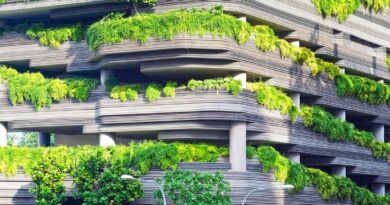
Urban forests can reduce heat. Wetlands may provide protection against flooding. Green roofs can improve insulation and manage rainfall. Such projects may not resemble traditional infrastructure, yet they can perform valuable economic functions.
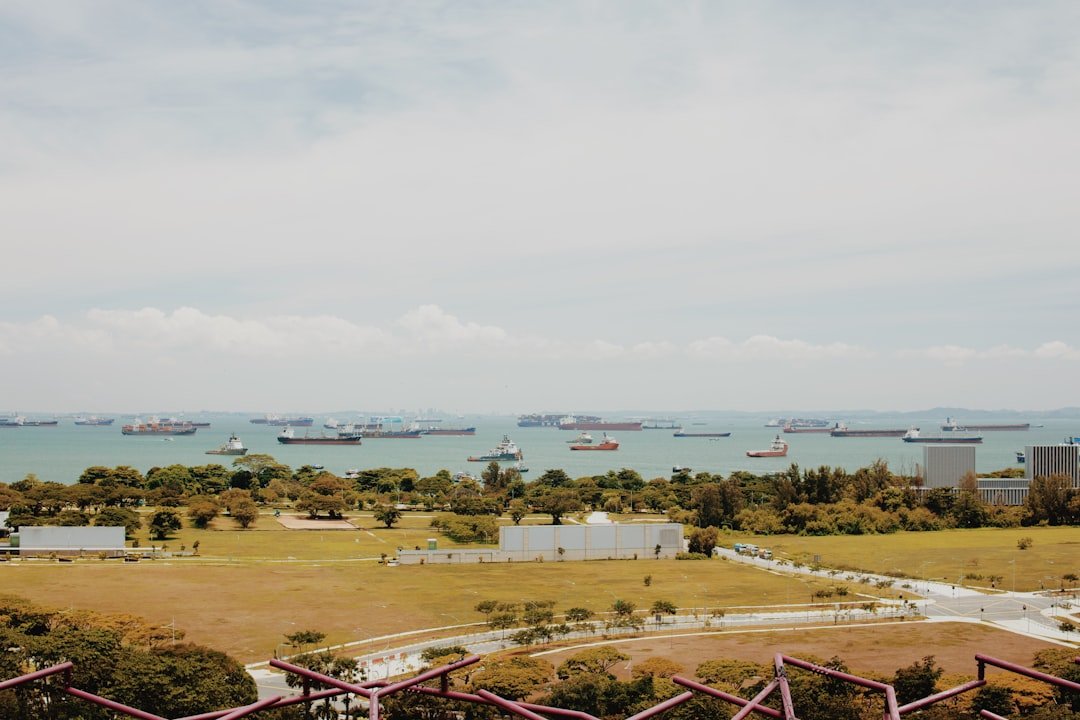
Singapore illustrates the wider approach. The city-state has incorporated parks, green corridors and nature-based design into dense urban development. Projects such as Gardens by the Bay support biodiversity and public space while strengthening Singapore’s appeal as a destination for residents, companies and tourists.
The financial benefits are not always easy to isolate. They may appear through higher property values, lower cooling costs, improved public health or greater resilience to climate events rather than through a single revenue stream.
Investment grows, but unevenly
Global investment in green infrastructure increased by 15% in 2022, suggesting that the sector is gaining credibility among both public and private investors.
Renewable-energy projects accounted for about 40% of the total. Solar and wind assets remain the most established part of the market because their revenues, operating costs and technological performance are relatively well understood.
Urban green projects, including parks and environmentally efficient buildings, represented approximately 25% of investment. Their expansion reflects the pressure on cities to reduce emissions while adapting to rising temperatures and population growth.
Policy has played a decisive role. More than 30 countries have introduced tax incentives or subsidies intended to encourage green infrastructure development.
Such support can improve project economics and reduce early-stage risk. It can also leave investors exposed to changes in government priorities. A project that depends heavily on subsidies may become less attractive if tax treatment, tariffs or public funding are revised.
Private-sector participation is rising as companies invest in renewable power, charging networks, energy storage and more efficient facilities. Groups such as Tesla and Google have committed capital to infrastructure intended to support their operations and reduce their environmental footprint.
Corporate investment is important, but it cannot replace public planning. Electricity grids, transport systems and urban water networks require coordination across companies, regulators and different levels of government.
The financing challenge
Green infrastructure often requires substantial capital before it generates any return. Projects may take years to plan and construct, while their benefits can extend over several decades.
This profile should make them suitable for pension funds, insurers and sovereign wealth funds with long investment horizons. In practice, many projects struggle to attract private capital.
The obstacle is not necessarily a lack of investor demand. Projects may be too small, insufficiently prepared or exposed to regulatory and construction risks that investors cannot price with confidence.
Revenue models also differ widely. A solar farm may sell electricity under a long-term contract. Public transport, flood defences and urban parks may depend more heavily on government budgets or indirect economic benefits.
Blended-finance structures can help. Governments and development banks may absorb part of the early risk, provide guarantees or contribute subordinated capital. This can make projects more suitable for commercial investors.
The structure must nevertheless be transparent. Public support should address identifiable market failures rather than protect private investors from risks they are equipped to bear.
Returns require credible measurement
Investors increasingly want projects to deliver both financial returns and measurable environmental benefits. That creates a demand for clear impact metrics.
Energy generation and emissions reductions can often be quantified. The effects of urban green space, biodiversity protection or climate adaptation are harder to compare across projects.
A project may be described as green because it uses efficient materials, but its construction could still carry a large carbon footprint. A new transport system may reduce emissions while displacing communities or creating other social costs.
Labels therefore provide limited information. Investors need to understand the project’s full lifecycle, including construction, operation, maintenance and eventual decommissioning.
They must also distinguish between mitigation and adaptation. Renewable energy can reduce future emissions. Flood barriers and water systems are designed to cope with climate effects that are already becoming unavoidable. Both are necessary, but their risks and revenue models differ.
Reliable measurement is particularly important when projects are financed through green bonds or sustainability-linked instruments. Investors need evidence that proceeds are being used as promised and that reported outcomes are meaningful.
Economic resilience becomes part of the return
The case for green infrastructure is often framed in environmental terms. Its economic value may be equally important.
Resilient electricity networks can reduce disruption to businesses. Better water infrastructure protects industrial production and agriculture. Efficient buildings lower energy costs. Public transport can improve access to labour markets and reduce congestion.
Urban green spaces may also support public health and property values. Their benefits are spread across residents, employers, insurers and local authorities, making them difficult for a single investor to capture.
This is one reason public policy remains central. Projects with substantial social and economic benefits may still fail to produce a sufficiently attractive private return.
Governments can address this through planning rules, pricing mechanisms, long-term procurement and targeted financial support. Poorly designed intervention, however, can result in expensive projects that depend indefinitely on subsidies.
The quality of investment matters as much as the volume.
Technology changes the economics
The next phase of green infrastructure will be shaped partly by advances in technology.
Cheaper energy storage could make renewable power more reliable. Digital systems can help electricity grids balance supply and demand. Sensors may improve the management of water, buildings and transport networks.
Better data can also support project assessment. Investors can monitor energy use, emissions, physical climate risks and construction progress more closely than in the past.
Technology introduces its own dependencies. Smart infrastructure can be vulnerable to cyberattacks, software failures and rapidly changing technical standards. Equipment supply chains may rely on critical minerals or manufacturing concentrated in a small number of countries.
Investors therefore need to assess operational resilience alongside environmental performance.
A market approaching its next test
Global green infrastructure investment could exceed $1 trillion by 2028, supported by climate targets, technological progress and regulatory pressure.
Reaching that level will require more than ambitious commitments. Governments will need credible project pipelines, stable regulation and faster approval processes. Investors will need structures that match long-term capital with the specific risks of each asset.
Developers, meanwhile, must demonstrate that projects can be built on time, operated efficiently and measured against clear environmental objectives.
The strongest opportunities are likely to be those where public need and commercial logic reinforce one another. Renewable energy, grid modernisation, building efficiency and selected transport projects already offer relatively established investment models.
Other areas, particularly climate adaptation and nature-based infrastructure, may require more innovative financing because their economic benefits are broad but their direct revenues are limited.
Green infrastructure is no longer a peripheral part of sustainable investing. It is becoming part of the basic economic response to climate change. The decisive question is no longer whether more capital will enter the sector, but whether that capital can be directed towards projects that are financially sound, environmentally credible and resilient enough to justify their long lives.