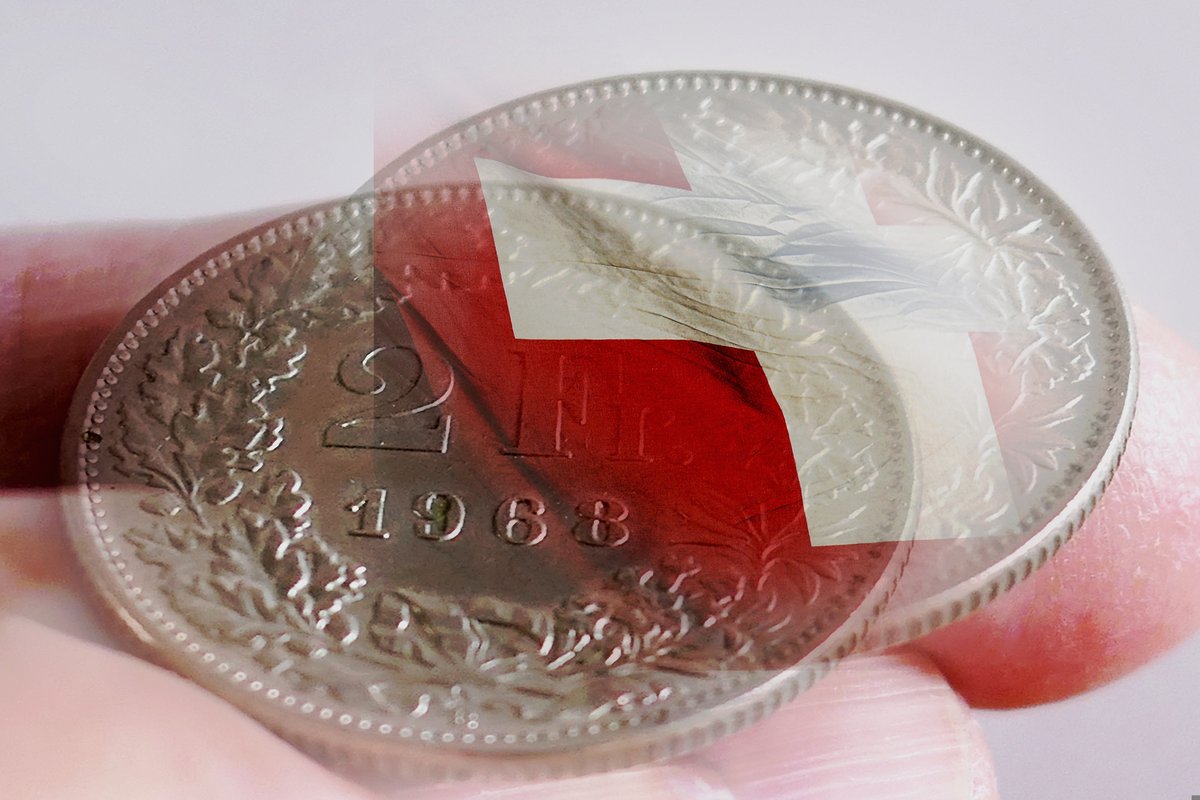
What a Strong CHF Does to Your Portfolio
A Swiss investor owns USD 1’000’000 of US assets. The portfolio rises 10 percent in dollars. Over the same period, the dollar loses 12 percent against the franc. Measured in Swiss francs, the investment ends about 3 percent below where it started.
The underlying assets performed well but the exchange rate removed the gain. For Swiss-based wealth, currency sits inside almost every foreign holding. US equities, European property, global bonds and private-market funds all produce a different result once their value is translated back into francs.
Your investment return and your CHF return are different numbers
A US equity portfolio has two components for a Swiss investor: the return of the securities and the movement of USD/CHF.
Take CHF 1’000’000 invested in US equities. A 10 percent gain in the securities combined with a 5 percent fall in the dollar leaves a CHF return of roughly 4.5 percent. A 10 percent decline in the dollar removes almost the entire equity gain.
Currency also works in the investor’s favour when the franc weakens. Foreign assets rise in CHF terms even when their local-market price stays unchanged.
Portfolio reporting therefore needs to separate local investment performance from currency translation. A Swiss client who spends, pays tax and measures family wealth in francs ultimately receives a CHF result.
Global portfolios carry more currency exposure than the asset allocation suggests
Foreign exchange exposure rarely appears as a separate allocation.
A US equity fund brings dollar exposure. A European property fund adds euro exposure. Private-equity commitments often sit in dollars even when portfolio companies operate across several countries. International bonds introduce exposure through their denomination and through any hedging undertaken by the manager.
A portfolio showing 40 percent equities, 20 percent bonds, 15 percent private markets and 10 percent real estate says little about the currencies underneath those positions.
The investor’s liabilities add another layer. A family with most future spending, property costs and tax obligations in Switzerland carries a different currency profile from a family financing homes, education or businesses in the United States and the euro area. Assets and future spending belong in the same currency analysis.
The franc has earned its defensive reputation over long periods
A century of market history supports the Swiss franc’s status as a defensive currency.
One analysis examined years in which the Dow Jones lost at least 20 percent within 30 days. The sample covered 14 such years over the past century, including the Great Depression, the 1987 crash, the dot-com collapse, the global financial crisis and the pandemic.
Across six major crises examined in more detail, Swiss inflation stayed below British inflation in every case. Swiss government bonds also produced positive nominal returns in almost every crisis in the sample. After inflation, they generated a positive return in four of the six periods.
The franc’s defensive strength also reduces the CHF value of foreign assets when money moves into Switzerland during periods of stress.
The franc has eased from its January peak
The effect became unusually visible at the start of 2026. In late January, one Swiss franc briefly bought more than USD 1.31, its strongest level against the dollar in more than a decade. Investors had been reducing dollar exposure and moving money into the franc, gold and euro assets.
The move did not continue in a straight line. By 19 September 2026, one franc bought about USD 1.22, equivalent to roughly CHF 0.82 per dollar. The franc therefore stood around 7 percent below its January peak against the US currency. The dollar regained ground during the year, including another rise in September as US interest rates moved higher.
A Swiss investor who bought US assets close to the January franc peak benefited from part of that reversal. Someone holding the same assets through the earlier appreciation experienced the opposite effect.
The comparison shows why one exchange-rate snapshot says little about a long-term portfolio. January demonstrated how far the franc strengthens during heavy demand for defensive assets. September shows how quickly part of that move reverses when interest-rate expectations and capital flows change.
A strong franc changes foreign returns immediately
The January appreciation reduced the CHF value of dollar assets while lowering the price of imported goods in Switzerland. Swiss inflation stood at just 0.1 percent at the time, against the Swiss National Bank’s price-stability range of zero to 2 percent.
Those two effects reach the same household differently. A stronger franc supports domestic purchasing power. Foreign investments lose value when translated into CHF.
For wealthy families with a large share of assets outside Switzerland, the balance therefore extends beyond whether a strong franc is “good” or “bad”. The currency strengthens the purchasing power of CHF liabilities while reducing the reported value of foreign holdings.
Hedging changes how much currency risk reaches the portfolio
A CHF-hedged US bond fund aims to retain the return of the underlying bonds while reducing the effect of USD/CHF movements. An unhedged version leaves both the bond return and the exchange rate in the investor’s result.
The consequences vary across asset classes. Currency movements usually account for a large share of the volatility in high-quality foreign bonds because the bond price itself moves relatively little. Hedging therefore changes the risk profile directly.
Equities bring a different mix. Company earnings, valuations and share prices drive larger long-term movements. Global companies also earn revenue in several currencies, although the investor still receives a CHF valuation when the holding is translated back into the portfolio.
Private assets stretch the currency exposure over longer periods. Capital calls, valuations and distributions occur over years. A dollar-denominated private-equity commitment therefore keeps an investor exposed to USD/CHF across multiple cash flows rather than one purchase and one sale. Using the same hedge ratio across all three asset classes ignores those differences.
Performance needs three numbers
Currency hedging relies largely on forward contracts. Interest-rate differences between the two currencies influence the cost, alongside transaction expenses and implementation.
The hedge also removes favourable currency movements.
When the franc weakens against the dollar, an unhedged US investment gains in CHF terms. A hedged investor gives up most of that currency gain in exchange for greater stability when the franc strengthens.
The appropriate level of hedging therefore starts with the investor’s balance sheet. A Swiss resident with most spending, property and future obligations in francs already carries a large economic exposure to CHF. A family with recurring dollar expenses or US liabilities has a different starting point.
A US manager can report a strong year in dollars while a Swiss investor sees a much smaller gain in francs. The same applies to private-equity valuations and foreign equity indices: local performance does not show the return that reaches the portfolio.
A proper review separates three figures: the asset’s return in its local currency, the effect of exchange-rate movements and the final result in Swiss francs.
The swing in 2026 shows how large that gap can become. One franc bought more than USD 1.31 in January and around USD 1.22 by 19 September.
Currency exposure therefore belongs in the performance discussion, not in a footnote. Hedging decides how much of the exchange-rate movement reaches the final CHF return.