Your Private Bank Is No Longer Competing Only With Other Private Banks
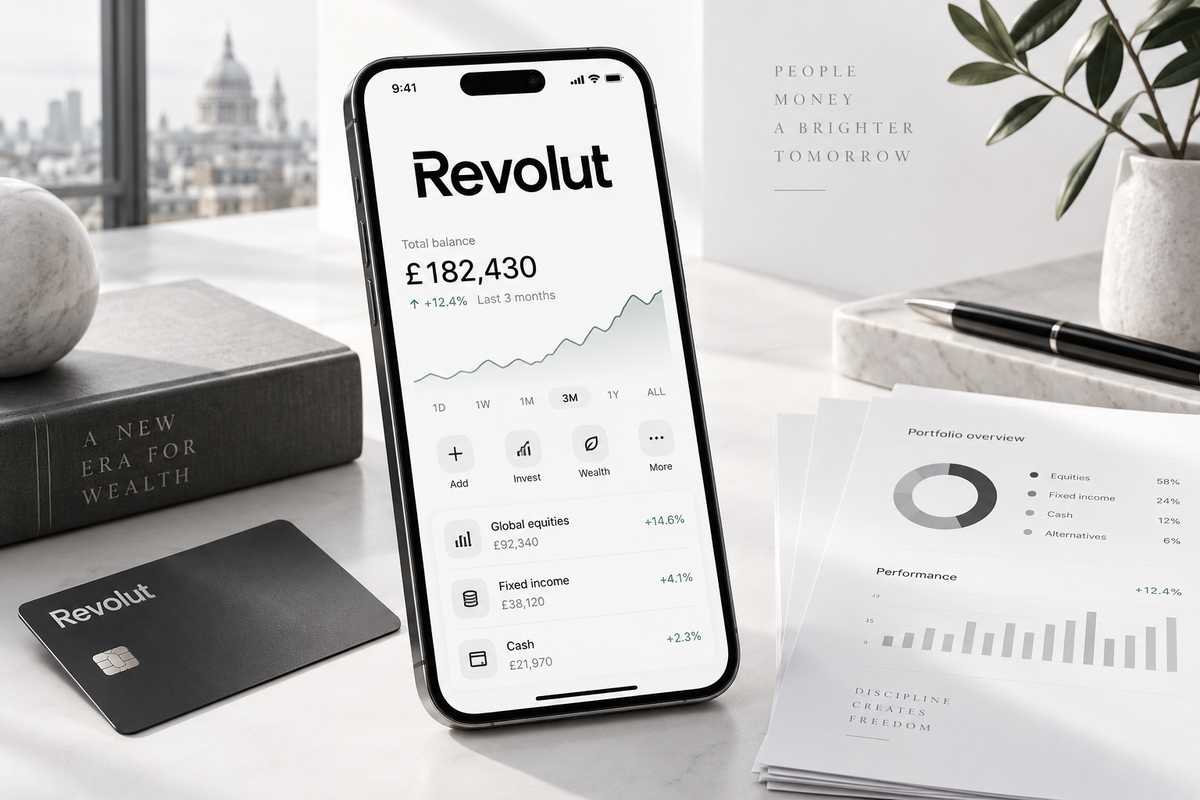
British digital bank Revolut already has 1.3 million customers in Switzerland and wants to move closer to their everyday finances. It has applied for a Swiss banking licence, plans to invest more than CHF 150 million over five years and wants to add salary accounts, Swiss IBANs and local deposit protection. More than half of its Swiss customers already use the service each month.
Wealth management is not a priority for Revolut in Switzerland. For Swiss wealth managers, that is not the main issue. If customers start receiving their salary, holding cash, paying bills and moving money through the same app, they become used to retrieving information and completing routine banking tasks without calling anyone.
The comparison only goes so far. Private equity, property and family holdings do not behave like a current account, and clients do not expect them to. They do notice when a financial institution still requires an email or telephone call for information it already holds.
Revolut does not need to win the investment portfolio to affect the standard clients expect from the firm that manages it.
Where wealth management remains different
A private portfolio does not update at one speed. Listed securities can move throughout the trading day. A private-equity NAV may still reflect the previous quarter. Property sits on its last valuation, while assets held with other banks arrive on different reporting schedules.
Some positions still need manual updates. Tax structures, investment mandates and family arrangements add constraints that simply do not exist in a current account.
None of that is a reason to hide basic information. If a private-equity valuation is from June, show June. If a property was last valued six months ago, show the date. If a transaction is moving through approvals, the client should still be able to see whether it is waiting for approval, execution or settlement.
The harder part of wealth management lies in the assets and the decisions around them. The irritation often comes from somewhere more mundane: reports that have to be requested, data the institution already holds but does not expose and routine enquiries that still require an email or telephone call.
Keep the adviser for decisions
A founder deciding whether to reduce a large position in the company they built may need advice on concentration risk, tax, liquidity and control of the business. A client considering another CHF 2 million private-equity commitment may need someone to review existing commitments, expected capital calls and available cash.
Neither client needs an adviser simply to retrieve a portfolio report or see how much capital has already been called.
Portfolio systems can aggregate positions, cash and exposures. They can compare holdings with agreed allocation ranges and investment restrictions. Client portals can provide statements, documents and portfolio information without waiting for someone at the bank to send them. Workflow systems can show where a transaction sits.
Letting clients access those functions themselves does not remove the adviser from the relationship. It stops using advisers for work that requires no advice.
The benefit also runs in the other direction. An adviser who spends less time retrieving documents, checking transaction status or assembling information can spend more time reviewing portfolios and preparing decisions.
A dashboard does not make every asset current
A dashboard can put today’s share price next to a private-equity valuation from three months ago, a property value from earlier in the year and a manually entered asset. The figures sit on one screen, but they do not belong to the same date.
A June NAV is still a June NAV. The platform should show when each value was last updated rather than present the portfolio as if every holding were current.
The portfolio keeps moving between reviews. A strong share-price rise can push one position above its target range. Currency exposure shifts. A private-market distribution can leave more cash in the portfolio than planned.
Software can catch those changes before the next meeting. The adviser decides what to do with them. Calling the whole portfolio “real time” does not solve the problem. Better reporting shows what is current, what is older and where a decision is needed.
Revolut is trying to add trust
Revolut acknowledges one advantage established Swiss banks still hold. Commercial chief David Tirado told Reuters that trust remains a weakness for Revolut compared with traditional Swiss banks. A Swiss licence would bring the local operation under FINMA supervision and allow the company to add domestic banking services that it cannot currently offer.
The trust gap widens as customers move from travel spending and currency exchange to larger balances and long-term investments. Handing over more money for longer requires more confidence in the institution behind the app.
Established Swiss banks already have the regulated relationships, advisers and experience to manage complex wealth. The priority is to remove routine manual work from the client relationship, including requests for documents the bank already holds.
Revolut does not need to enter wealth management to affect it
Revolut is looking at wealth management, but it is not a priority in Switzerland. The pressure on established firms starts before that. If more of its 1.3 million Swiss customers use Revolut for salaries, cash and everyday banking, they spend more time with a service built around direct access and self-service.
That does not make private equity liquid or succession planning straightforward. It does make slower service easier to notice: reports that have to be requested, documents sent manually, transactions with no visible status and portfolio data the institution already holds but does not show.
Wealth managers do not need to simplify complex wealth. They do need to remove the administration that has nothing to do with that complexity.