
Hong Kong supera la Svizzera come centro nevralgico per la gestione patrimoniale offshore a livello mondiale
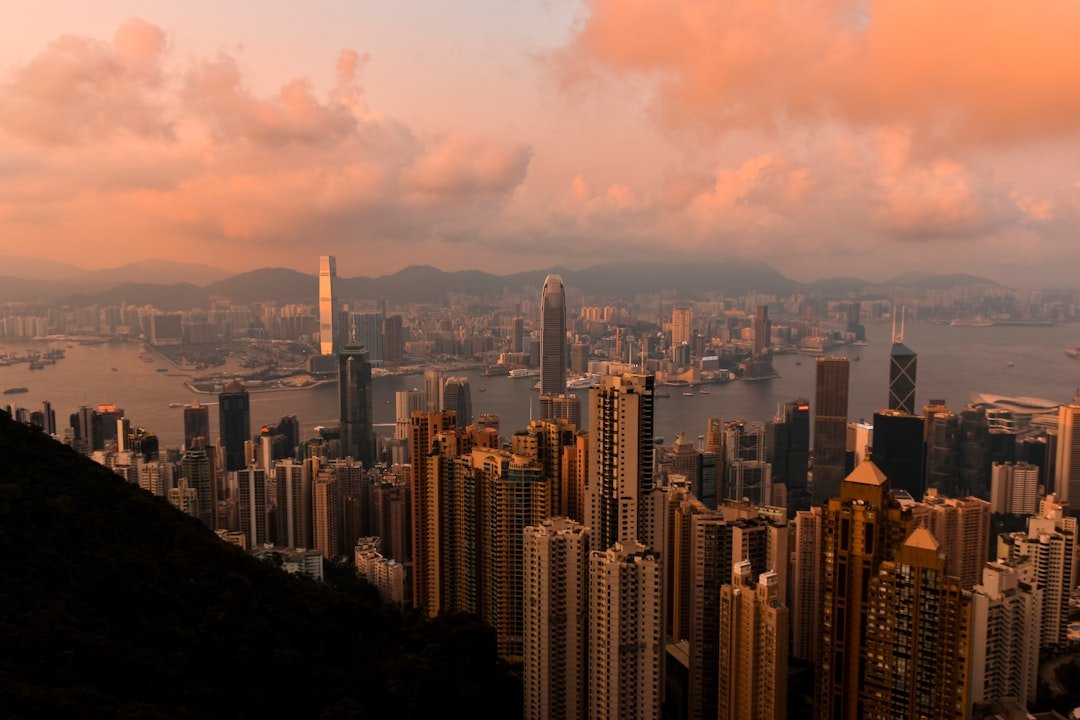
Hong Kong has overtaken Switzerland as the world’s largest centre for cross-border wealth, marking a symbolic shift in an industry long associated with Swiss private banking. Wealth managers in Hong Kong held an estimated $2.95 trillion in international assets in 2025, narrowly exceeding Switzerland’s $2.94 trillion, after the Asian centre recorded annual growth of 10.7%. The margin is small, but the forces behind it are not: Asian fortunes are expanding, mainland Chinese capital is seeking access to international markets and wealthy families are increasingly dividing assets among several jurisdictions rather than relying on a single financial centre.
Switzerland remains one of the world’s most important wealth-management markets, supported by political stability, specialist expertise and a private-banking industry built over generations. Hong Kong’s advance therefore does not amount to the displacement of Switzerland so much as a reordering of global wealth flows. The centre of gravity is moving east as Asian wealth expands faster than the mature fortunes traditionally managed in Europe, while clients respond to geopolitical uncertainty by spreading assets across financial centres with different currencies, legal systems and market access.
China drives Hong Kong’s ascent
Hong Kong’s rise rests above all on its relationship with mainland China, which accounts for around 60% of the cross-border wealth booked in the territory. Its position gives Chinese entrepreneurs and wealthy families access to international banks, investment products and capital markets while allowing global institutions to serve clients connected to the world’s second-largest economy. The recovery of Hong Kong’s equity markets and stronger initial public offering activity in 2025 reinforced that appeal by creating new wealth, providing liquidity to company founders and drawing international capital back to the city.
The connection is commercially powerful but also represents a concentration risk. Hong Kong benefits when mainland wealth creation, corporate activity and cross-border investment are strong, yet its financial institutions remain exposed to changes in Chinese capital controls and regulatory policy. Beijing’s recent scrutiny of unauthorised overseas investment channels has reminded banks, insurers and wealth managers that access to mainland clients ultimately depends on rules determined outside Hong Kong’s financial industry. The same relationship that has propelled the city ahead of Switzerland could therefore make future growth more volatile.
Switzerland loses the lead, not its relevance
Switzerland’s position has changed considerably since the era in which banking secrecy formed the core of its international appeal. Automatic exchanges of tax information, stricter anti-money-laundering controls and greater scrutiny of undeclared assets have forced Swiss banks to replace secrecy with a proposition based on expertise, security, political stability and sophisticated cross-border advice. These changes have made the market more transparent, but they have not removed the advantages created by a deep concentration of private banks, lawyers, fiduciaries, asset managers and multilingual advisers.
The Swiss model nevertheless faces slower underlying wealth growth than its Asian competitors and greater pressure to defend its competitiveness. Hong Kong, Singapore, Dubai and the United States are all attracting international clients for different reasons, giving wealthy families more credible alternatives than they had two decades ago. Switzerland can no longer assume that historical reputation alone will secure its lead, particularly as new fortunes are created in regions whose clients prefer financial centres closer to their businesses, families and investment opportunities.
Offshore wealth becomes more diversified
The term offshore wealth often evokes secrecy or tax avoidance, but in modern wealth management it more broadly describes assets booked outside the owner’s home jurisdiction. Wealthy families may use several centres to gain access to different currencies, banks, investment markets, legal structures or political environments. A Chinese entrepreneur may hold assets in Hong Kong and Singapore, a European family may combine Switzerland with the United States or Dubai, and an internationally mobile family may use several jurisdictions for distinct parts of its wealth.
This diversification has become more important as sanctions, elections, capital controls and geopolitical disputes create risks that cannot be addressed through conventional asset allocation alone. Clients are no longer diversifying only among equities, bonds and property; they are also diversifying the jurisdictions, custodians and legal systems through which those assets are held. Hong Kong’s advance is therefore part of a larger fragmentation of global wealth, in which no single centre is expected to satisfy every requirement.
Family offices become part of the competition
Hong Kong has sought to reinforce its position by attracting family offices and expanding the services available to wealthy families. Tax concessions, investment-migration programmes, capital-market access and a growing ecosystem of advisers are intended to make the city a base not only for portfolio management but also for succession planning, philanthropy, private investments and family governance.
The contest is not limited to Hong Kong and Switzerland. Singapore has built a strong family-office sector, although tighter scrutiny following money-laundering cases has slowed some of its momentum. Dubai and Abu Dhabi are attracting international families through favourable taxation, political stability and access to markets spanning Europe, Asia and Africa. The result is a more competitive market in which financial centres must offer a complete wealth-management environment rather than relying on banking services alone.
For family offices, proximity to investment opportunities is often as important as tax or regulation. Hong Kong offers direct access to Asian public markets, private companies, venture capital and China-related transactions, while Switzerland retains an advantage in wealth preservation, global diversification and complex multi-generational structures. The choice between them is therefore rarely absolute; many large families will use both.
Regulation remains part of the value proposition
Financial centres often describe regulation as a burden, but in wealth management credible supervision is also part of the product. Clients need confidence that assets are held securely, transactions can be completed and legal rights will be enforced. At the same time, excessively complex or unpredictable rules can push business elsewhere, particularly when families have several viable jurisdictions from which to choose.
Hong Kong must manage this balance carefully. Its common-law tradition, freely convertible currency and international banking system have long distinguished it from mainland China, yet investors continue to assess how political integration may affect regulatory autonomy and legal certainty. Switzerland faces a different challenge: its standards are widely trusted, but wealth managers increasingly argue that the country must respond more quickly to competition and avoid rules that make client service unnecessarily difficult.
Neither centre can prosper through regulatory leniency alone. The strongest hubs will be those capable of combining rigorous controls with efficient onboarding, tax transparency, digital infrastructure and predictable treatment of international clients.
Technology reshapes private banking
The competition for cross-border wealth is also becoming technological. Wealthy clients expect consolidated reporting, digital onboarding and secure access to portfolios held across multiple banks and jurisdictions. Institutions that once differentiated themselves mainly through personal relationships must now support those relationships with better data, faster administration and a clearer view of complex assets.
Hong Kong’s financial sector is investing heavily in digital platforms, while its proximity to Asian technology companies gives it access to innovation in payments, artificial intelligence and client analytics. Swiss wealth managers retain strong expertise in bespoke advice but must continue modernising systems that were often built around individual institutions rather than clients whose assets are distributed globally. Technology will not replace trust in private banking, although it will increasingly determine whether that trust is supported by an efficient and transparent service.
Hong Kong’s lead may widen, but it is not secure
BCG expects the difference between Hong Kong and Switzerland to approach $600 billion by 2030 as Asian wealth continues to expand. That forecast reflects China’s industrial strength, the recovery of Hong Kong’s capital markets and the broader accumulation of private wealth across Asia. Hong Kong’s position as the region’s leading financial centre also remains strong: it ranks third globally in the latest Global Financial Centres Index, behind only New York and London.
The outlook nevertheless depends heavily on whether Hong Kong can preserve the characteristics that made it useful as an international gateway. Continued access to mainland wealth, an open capital account, legal predictability and confidence among global institutions will matter more than promotional targets. Renewed restrictions on capital leaving China, prolonged weakness in Chinese asset prices or growing concern about political intervention could slow the inflows that produced its recent lead.
Switzerland, meanwhile, is unlikely to retreat quietly. Its private banks still manage enormous international portfolios, and the country retains a reputation for stability that becomes especially valuable during crises. Its challenge is to modernise the proposition without weakening the qualities on which that reputation rests.
Hong Kong’s move into first place therefore marks a genuine change in global wealth management, but not the emergence of a permanent winner. The industry is becoming more regional, more competitive and more dependent on clients who deliberately divide their wealth among several centres. Hong Kong now holds the largest share of that cross-border market, yet the future will belong less to the jurisdiction that attracts every asset than to those capable of remaining indispensable within an increasingly diversified global system.