Succession Is Becoming a Source of Acquisition Opportunities
Germany’s Mittelstand includes thousands of companies that have remained under family ownership for generations. Their business models often depend on highly specialised production, long customer relationships and owners who combine management responsibilities with substantial personal wealth tied to the company.
Passing such businesses to the next generation has become more difficult. A successor must be willing to assume operational responsibility while also financing the ownership transfer, investing in equipment and managing commercial risks. A company with valuable technology and a strong reputation can still require more capital than the next generation wants to commit.
These pressures influence the choice of buyer. An industrial acquirer with overlapping operations can derive value from a business that a financial investor would assess primarily through its standalone earnings. Shared production, procurement, distribution and research capabilities offer opportunities to improve profitability after the acquisition.
Hennig and Polifarma provide an example of how an existing commercial relationship can develop into ownership. The German company had operated independently for more than 125 years, but the owners ultimately selected a business partner already familiar with its products and organisation. Polifarma, in turn, acquired a functioning industrial platform in Germany rather than building one from the beginning.
Other businesses face less favourable circumstances. An insolvent manufacturer has limited time to identify a buyer, and creditors become central participants in negotiations. The sale of Mayer & Cie’s industrial assets demonstrates how ownership can change once financial distress makes continuation under the existing structure impossible.
The price obtained in these transactions depends on more than the company’s historical profitability. Buyers assess the durability of customer relationships, the technical expertise of employees, future capital expenditure and the cost of integrating production. The seller’s financial position and the availability of alternative buyers influence negotiations as well.
What Swiss Industrial Owners Can Learn
Switzerland faces many of the same succession questions, although its industrial structure and economic conditions differ from Germany’s.
According to the Swiss government’s SME portal, approximately 101’427 Swiss companies were looking for a successor in 2024. Succession concerns affected around 17 percent of businesses employing between 10 and 49 people, compared with 8.1 percent of companies employing between 50 and 249 people.
The same government data show that 42 percent of Swiss SME ownership transfers go to a direct descendant, while another 11 percent involve other family members. Employees or management partners account for 23 percent. The remaining transactions include external buyers and parties with existing commercial relationships.
Industrial acquisitions therefore form part of a much larger ownership transition. Many Swiss manufacturers hold specialised capabilities in precision engineering, machinery, medical technology, electronics and industrial components. Their owners must decide whether the next generation can finance continued investment, whether management can acquire the business or whether an established industrial group offers a more credible successor.
The Swiss government’s SME portal describes a market of approximately 10’000 mature companies, many with decades of operating history and established positions in specialised markets. Around 50–60 percent of these businesses seek external capital to support succession, according to the estimates cited by the portal.
An acquisition by an industrial group can give a Swiss company access to a broader sales organisation, shared technology development and additional capital. It can also change the company’s independence, management structure and long-term investment priorities.
Owners evaluating potential buyers therefore have to examine the proposed operating model alongside the financial offer. The retention of local production, the future role of family shareholders and management, and the treatment of employees all affect the eventual outcome.
The Sale of a Family Business Changes the Family Balance Sheet
Selling a manufacturing company converts an often illiquid controlling interest into financial assets, although the final proceeds depend on the transaction structure, taxes, liabilities and any retained ownership.
The family’s exposure also changes. Before the transaction, much of its wealth might depend on a single company’s orders, investment requirements and operating performance. The proceeds create opportunities to diversify investments, fund retirement, support descendants and establish a more formal wealth-management structure.
Some transactions involve an extended transition. Sellers retain a minority shareholding, remain on the board or continue managing the company for an agreed period. Such arrangements allow buyers to preserve relationships and operational expertise while giving the former owners exposure to the business’s future performance.
Swiss investment foundation Renaissance describes transactions in which family owners initially retain 20–30 percent of the company for three to five years, while management receives an equity stake. Although this is one investment model rather than a market-wide standard, it demonstrates how ownership can be transferred gradually instead of through a complete immediate exit.
Families also have to consider how the sale affects inheritance planning. Shares that were previously concentrated in a family operating company become proceeds that can be divided among heirs or invested through a family office. Where only one child managed the company, a sale can also resolve difficult questions about control and compensation among siblings.
The acquisition agreement determines how much financial and operational responsibility remains with the former owners. Deferred payments, earn-outs, warranties and retained minority stakes can extend their exposure well beyond the closing date.
Who Owns Europe’s Industrial Companies Next?
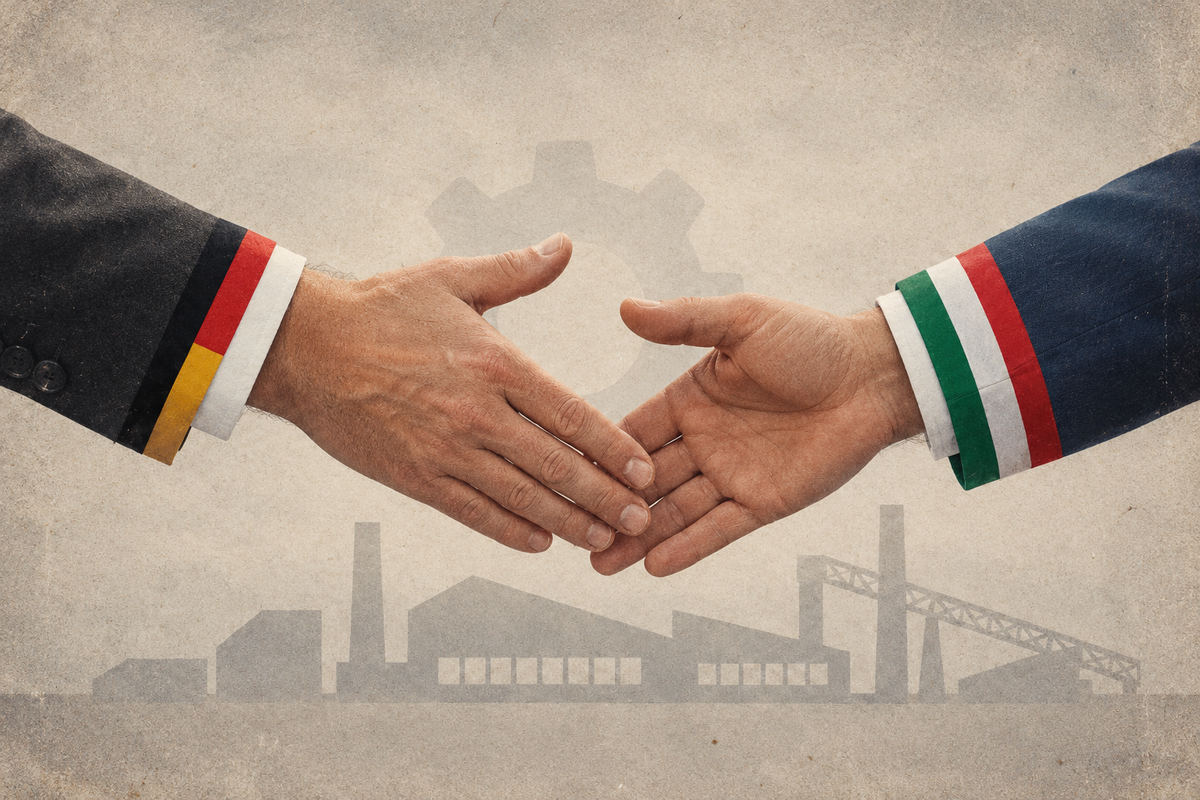
The acquisition of established German businesses by Italian buyers reflects a European industrial economy in which ownership increasingly follows technological capabilities and the availability of capital.
Polifarma acquired a pharmaceutical manufacturer with a longstanding German presence and a family ownership succession to resolve. Diesse and EsseEmme Tecno acquired specialised technology from a financially distressed machinery manufacturer. Danese strengthened its industrial product range through the purchase of German technical assets.
The companies involved differ in size, sector and financial condition, but the transactions share a commercial foundation. Italian buyers have identified capabilities that complement their existing operations, while German sellers have found reasons to transfer ownership.
Swiss industrial families face similar choices as founders and long-serving owners approach retirement. Their companies can remain attractive acquisition targets even when domestic manufacturing conditions are difficult, especially where they control specialised processes, intellectual property or established customer relationships.
The next generation of European industrial ownership will partly emerge from these individual succession decisions, negotiated between families, management teams and industrial buyers whose businesses increasingly cross national borders.