
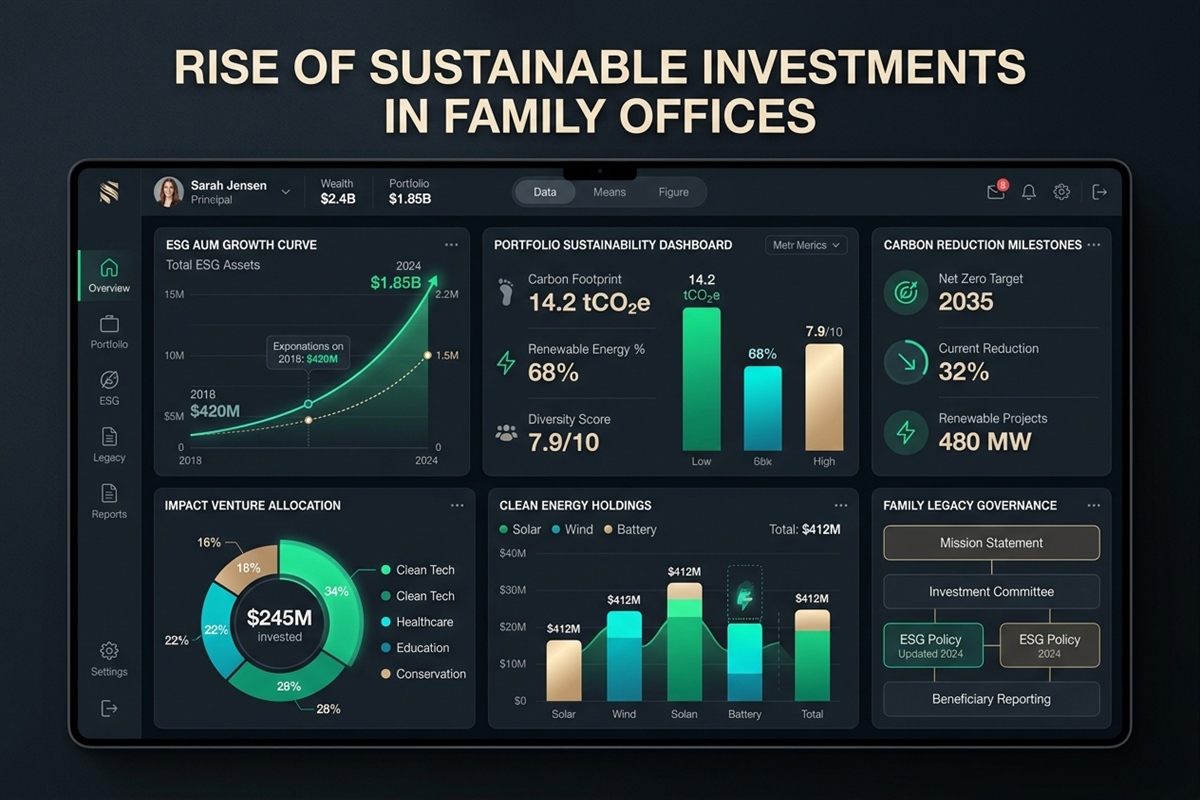
Rise of Sustainable Investments in Family Offices
The rise of sustainable investments within family offices marks a significant shift in wealth management strategies. Family offices, which manage the private wealth of high-net-worth families, are increasingly prioritizing environmental, social, and governance (ESG) factors in their investment decisions. According to a recent report, over 80% of family offices have incorporated sustainable investments into their portfolios, driven by a growing awareness of climate change and social responsibility.
Family offices, traditionally focused on wealth preservation and growth, are now at the forefront of a broader movement towards sustainable investing. This trend can be traced back to the early 2000s when the concept of socially responsible investing began gaining traction. As societal awareness of environmental issues and corporate ethics grew, so did the demand for investments that aligned with these values.
Historically, family offices were conservative in their investment approach, focusing on safe assets to preserve wealth across generations. However, the increasing influence of younger family members, who are often more environmentally and socially conscious, has led to a reevaluation of these strategies. For instance, the Pritzker family office has been noted for its significant shift towards investments in renewable energy and sustainable technology.
A mini-case study illustrates this shift: a European family office, managing assets worth over €2 billion, transitioned 40% of its portfolio towards sustainable investments over the past five years. This move was driven by both ethical considerations and the realization of long-term financial benefits associated with ESG-focused companies.
Key Data and Trends
- According to the Global Family Office Report 2026, 70% of family offices now consider ESG factors in their investment processes. This reflects a broader trend within the financial sector towards responsible investing.
- The number of family offices investing in renewable energy has doubled since 2018, indicating a strong commitment to combating climate change.
- Research by the Financial Times reveals that family offices with sustainable investment strategies have outperformed traditional portfolios by 15% over the past decade.
- The rise of impact investing, where investments are made with the intention of generating positive social or environmental impact alongside financial returns, is a key trend. Family offices are increasingly allocating funds to projects that address global challenges.
- Data shows that 60% of family offices plan to further increase their allocation to sustainable investments over the next three years, underscoring the enduring appeal of responsible investing.
“Sustainable investments not only align with the values of many modern family offices but also offer competitive financial returns,” says James Thornton, CEO of a leading sustainable investment firm. Thornton’s insights underscore the dual benefits of ESG-focused strategies.
Dr. Emily Harris, a financial analyst specializing in family offices, notes, “The integration of ESG factors helps mitigate risks and uncover new growth opportunities.” Harris emphasizes the strategic advantages of incorporating sustainability into investment decisions.
According to Sarah Williams, head of a prominent family office, “Our commitment to sustainable investing reflects our desire to make a positive impact while securing long-term financial performance.” Williams’ comments highlight the growing recognition of sustainability as both an ethical and economic imperative.
The shift towards sustainable investments carries significant implications for the wealth management industry. It reflects a broader societal change towards responsible consumption and investment practices.
- Family offices should consider incorporating ESG criteria into their investment frameworks to remain competitive and relevant.
- Building a diversified portfolio with sustainable investments can help mitigate risks associated with traditional asset classes.
- Engaging with ESG-focused asset managers can provide family offices with expertise and insights into sustainable investment opportunities.
- Investing in technology and innovation that address environmental challenges can offer both financial and societal returns.
- Monitoring and reporting on the impact of sustainable investments can enhance transparency and accountability within family offices.
The trend towards sustainable investing is expected to accelerate. Family offices are likely to play a pivotal role in driving this change, given their ability to allocate significant capital towards impactful initiatives.
In the next years, sustainable investments are projected to become a central tenet of family office strategies worldwide. A report by Bloomberg predicts that ESG assets could surpass $50 trillion by 2025, reflecting the growing importance of sustainability in financial markets. As awareness and demand for responsible investments continue to rise, family offices must proactively adapt to these changes to ensure long-term success.
The rise of sustainable investments in family offices marks a transformative shift in wealth management practices. This trend, driven by both ethical considerations and financial performance, highlights the evolving priorities of modern investors. As family offices continue to embrace sustainable strategies, they have the potential to shape the future of responsible investing. As James Thornton aptly noted, the dual benefits of aligning investments with values and achieving competitive returns make sustainable investing an attractive proposition for family offices. By adapting to these changes, family offices can play a crucial role in promoting a more sustainable and equitable world.