
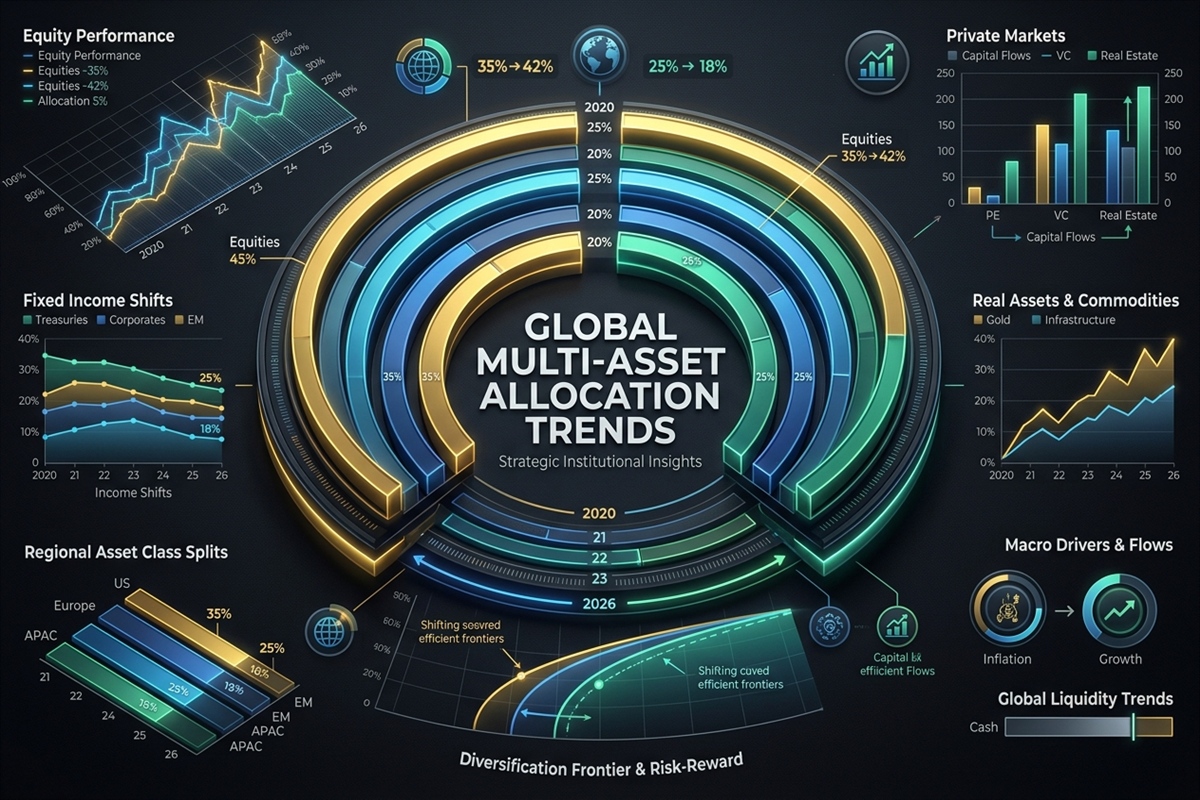
Global Multi-Asset Allocation Trends 2026
The landscape of global multi-asset allocation is undergoing significant transformation, with investors increasingly seeking diverse strategies to optimize returns and manage risks. Multi-asset allocation, a crucial component of modern investment strategy, involves distributing investments across a range of asset classes such as equities, bonds, real estate, and commodities. According to a recent industry report, 60% of institutional investors have increased their allocations to multi-asset funds in the past year, highlighting a growing trend towards diversification.
Background
Historically, multi-asset allocation has been a cornerstone of investment strategy, providing a balanced approach to risk and reward. In the past decade, the financial markets have witnessed unprecedented volatility, prompting investors to reassess their strategies. For example, the 2008 financial crisis underscored the importance of diversification as a hedge against systemic risk.
A mini-case study of the post-crisis recovery period reveals that portfolios with diversified asset classes outperformed those concentrated in single sectors. Investors who adopted a multi-asset approach managed to navigate the turbulent waters more effectively, thanks to the varied performance of different asset classes.
Another trend influencing multi-asset allocation is the integration of environmental, social, and governance (ESG) criteria into investment decisions. With increased awareness around sustainability, investors are not only focused on financial returns but also on the societal impact of their investments. A growing number of multi-asset funds now incorporate ESG factors, reflecting a broader shift towards responsible investing.
Key Data and Trends
- According to a survey by BlackRock, 74% of investors believe that multi-asset strategies will gain importance over the next five years, driven by the need for risk mitigation and consistent returns.
- The global multi-asset investment market is projected to grow at a compound annual growth rate (CAGR) of 7.3% from 2023 to 2028, highlighting its increasing appeal among investors.
- In recent years, there has been a notable shift towards incorporating alternative assets such as private equity, infrastructure, and hedge funds into multi-asset portfolios, aiming to enhance returns and diversify risks.
- Data from Morningstar shows that multi-asset funds have consistently outperformed traditional single-asset funds over the past decade, with an average annual return of 6.5% compared to 4.2% for equity-only funds.
- Technological advancements in data analytics and portfolio management tools are enabling more precise and dynamic multi-asset allocation, offering investors enhanced insights and decision-making capabilities.
Expert Perspectives
Dr. Emily Tran, a senior portfolio manager at Vanguard, states, “Multi-asset allocation provides a robust framework for managing risk while capturing growth opportunities across diverse economic conditions.” Her views highlight the adaptability of multi-asset strategies in volatile markets.
According to John Smith, CEO of Global Investment Partners, “The integration of ESG factors into multi-asset portfolios is no longer optional but a necessity for long-term sustainability.” Smith’s perspective underscores the growing importance of responsible investing in shaping future allocation strategies.
Professor Alan Green, an economist at the London School of Economics, comments, “The evolution of data analytics is transforming multi-asset allocation, offering unprecedented insights into market trends and asset correlations.” This analysis emphasizes the role of technology in refining investment strategies.
Implications and Actionable Insights
The evolving trends in multi-asset allocation carry significant implications for investors seeking to optimize their portfolios. As these strategies gain traction, investors must adapt to the changing landscape to achieve their financial objectives.
- Investors should consider diversifying their portfolios with alternative assets to enhance risk-adjusted returns and explore new growth opportunities.
- Integrating ESG factors into multi-asset strategies can provide a competitive edge and align investments with broader societal values.
- Leveraging advanced data analytics tools can enable investors to make informed decisions and dynamically adjust their allocations based on market conditions.
- Regularly reviewing and rebalancing portfolios is crucial to maintain alignment with investment goals and risk tolerance, especially in fluctuating markets.
- Investors should seek professional advice to tailor multi-asset strategies to their unique circumstances and long-term objectives.
The outlook for global multi-asset allocation is promising, with increasing interest from institutional and retail investors alike. As the market evolves, so too will the strategies employed, necessitating ongoing adaptation and innovation.
Future Outlook
Looking ahead, the next three to five years are expected to see continued expansion in multi-asset allocation, driven by technological advancements and evolving investor preferences. A forecast by PwC predicts that by 2028, multi-asset funds will account for over 25% of global assets under management, underscoring their growing significance in the investment landscape.
Investors should remain vigilant, staying informed of emerging trends and technological developments that could impact their portfolios. By embracing innovation and maintaining a flexible approach, they can navigate the complexities of the global investment environment with confidence.
Conclusion
The dynamic nature of global multi-asset allocation offers investors a versatile tool for navigating the complexities of modern financial markets. As highlighted by Dr. Emily Tran and John Smith, the integration of diverse asset classes and ESG factors is paramount in today’s investment strategies. By leveraging advanced analytics and maintaining a proactive approach, investors can position themselves to achieve their financial objectives while contributing to a sustainable future.