
Bali’s Tax-Free Finance Bet
Bali already sells an attractive version of international life: political distance from Jakarta, global air connections, private villas, international schools and an established community of entrepreneurs and mobile professionals. Indonesia now wants to add banks, asset managers and family offices to that mix.
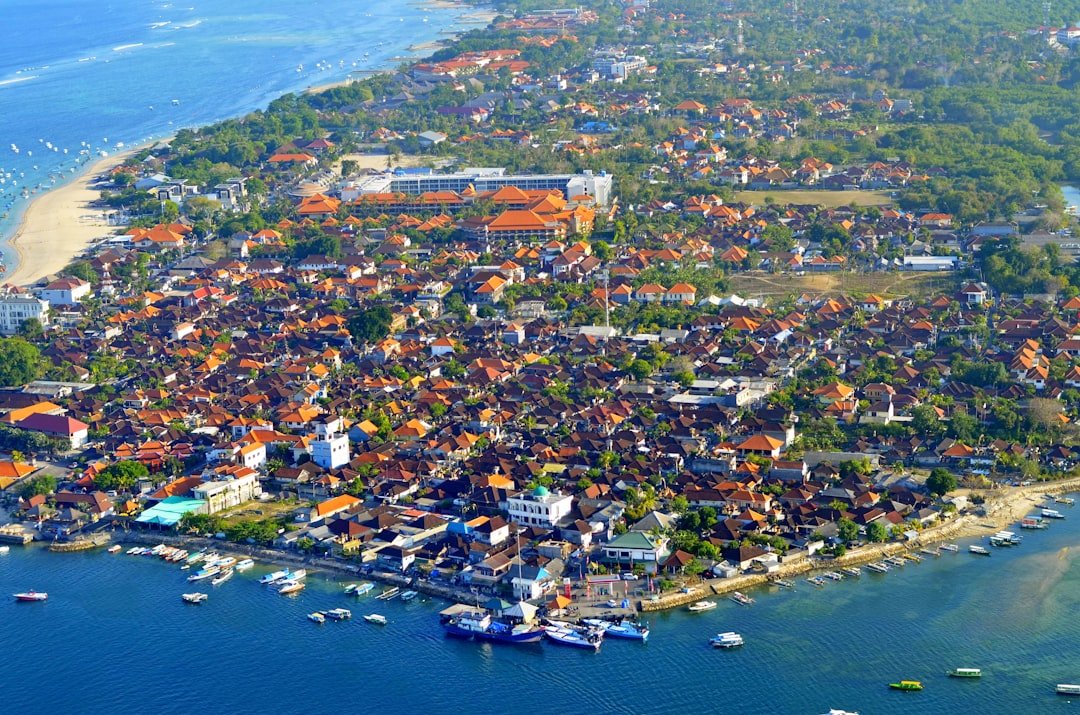
President Prabowo Subianto’s government is preparing an international financial centre offering extensive tax concessions, simplified licensing and a dedicated dispute-resolution system. Although the location has not been formally confirmed, the Kura Kura Bali and Sanur special economic zones are widely regarded as the leading candidates.
The stated ambition reaches well beyond regional wealth administration. Jakarta wants a financial centre capable of competing with Singapore and Hong Kong, with government estimates suggesting that it could attract between $17 billion and $28 billion in foreign investment.
Tax incentives can bring institutions into a jurisdiction. They cannot, by themselves, persuade those institutions to remain there.
A Financial Centre Built Around Exemptions
The proposed framework is unusually generous. Financial companies established within the centre could receive a full reduction in corporate income tax, while qualifying foreign professionals may be exempt from Indonesian income tax. Regulatory approvals would be accelerated and disputes handled through a specialised court or arbitration structure designed to give international investors greater legal certainty.
Further proposals have included exemptions for certain foreign-sourced income and capital gains. Kura Kura Bali, on Serangan Island, has already been developed as a special economic zone and is positioning itself as a base for investment platforms, education providers and international business activity. The project has attracted approximately $90 million in investment so far, against a much larger long-term development target.
The formula resembles strategies used elsewhere. Dubai built the Dubai International Financial Centre around an independent regulatory environment, English-language common-law courts and favourable taxation. Singapore combines competitive taxation with political stability, credible supervision and deep professional infrastructure. Hong Kong’s attraction has historically rested on capital-market access, liquidity and its relationship with mainland China.
Indonesia is attempting to compress parts of that development into a single policy package. Bali provides the international profile. Tax concessions provide the headline. A separate legal framework is intended to provide reassurance.
Yet established financial centres are more than designated districts containing favourable rules. They function because investors trust the institutions applying those rules.
The Timing Reveals the Pressure
The proposal arrives as Indonesia is trying to reverse a sharp deterioration in international market sentiment.
Foreign investors have withdrawn billions of dollars from Indonesian equities in 2026, while the Jakarta Composite Index has lost more than 30% and faced scrutiny from global index providers over market transparency and ownership disclosure. The rupiah has traded near record lows against the US dollar. Moody’s and Fitch have moved their sovereign outlooks to negative, citing fiscal pressures and concerns over policy credibility, although S&P retained Indonesia’s investment-grade rating with a stable outlook in July.
Indonesia is not confronting the financial fragility associated with the Asian crisis of the late 1990s. Public debt remains moderate, the banking system is better capitalised and foreign-exchange reserves provide a meaningful buffer. The concern is subtler: a gradual loss of confidence in the predictability of economic policy.
Prabowo entered office with expensive social and industrial ambitions, including a nationwide free-meals programme and a larger role for state-directed investment. These policies may support domestic development, but they also raise questions about revenue, fiscal discipline and the boundaries between government strategy and commercial decision-making.
The behaviour of international banks offers another signal. The Indonesian operations of Citigroup, Standard Chartered and HSBC reportedly transferred around $640 million in dividends to their parent companies over two years, slightly more than they earned locally during the same period. Indonesian regulators have described the transfers as normal profit repatriation rather than an institutional withdrawal. Even so, the contrast with earlier periods, when foreign banks retained more capital to finance local expansion, is difficult to ignore.
A new financial centre is therefore being proposed while existing international institutions are limiting the capital they leave in the country. Bali’s incentives are partly an expansion strategy and partly an attempt to rebuild confidence.
Danantara Complicates the Proposition
The more immediate reputational risk surrounds Danantara, the sovereign investment organisation established by Prabowo to consolidate state assets and finance strategic projects.
Its scale gives the government a potentially powerful investment vehicle. Danantara is expected to oversee hundreds of state-owned enterprises, with plans to reduce their number through restructuring and consolidation. It has also demonstrated access to international markets: its debut international bond offering raised $1.5 billion after receiving orders reportedly worth approximately $4.6 billion.
Domestic fundraising has proved more controversial.
Indonesian businesses were previously encouraged to purchase so-called Patriot Bonds offering a coupon of only 2%, substantially below prevailing market yields. The structure was presented as a voluntary contribution to national development, although its economics gave investors little conventional reason to participate.
New legal protections have intensified the scrutiny. Provisions covering certain Danantara securities restrict the ability of tax and law-enforcement authorities to pursue investors or use transaction information as evidence in tax proceedings. Government representatives argue that these protections are necessary to mobilise previously undeclared or inactive capital and deny that the rules weaken Indonesia’s commitment to financial integrity.
Civil-society organisations, legal specialists and economists see a different risk. By limiting scrutiny of the source of invested funds, the legislation may create a route through which proceeds connected to tax evasion, corruption or other offences can acquire the appearance of legitimate state-backed investment.
A coalition of Indonesian organisations has asked the Financial Action Task Force to examine the provisions and has also pursued a judicial review. FATF has acknowledged the concerns and indicated that they may be considered during Indonesia’s next mutual evaluation, expected in 2028.
For a country promoting itself as an international financial jurisdiction, this is more than a domestic governance dispute. Banks and asset managers operating across borders must satisfy the compliance standards of their home regulators, correspondent banks, auditors and institutional clients. A transaction may be legal under local law and still fall outside an institution’s risk appetite.
The Competition Is Institutional
Bali does not need to displace Singapore or Hong Kong to become commercially relevant. It could develop a narrower role serving Indonesian wealth, regional investment structures, private markets, tourism-related capital and internationally mobile entrepreneurs with connections to Southeast Asia.
Indonesia has considerable advantages. It is the region’s largest economy, has a population of more than 280 million and offers exposure to infrastructure, commodities, renewable energy, digital services and a growing consumer market. Its domestic pool of private capital is expanding, while Bali already attracts globally mobile founders and professionals.
The weakness lies in the proposition’s institutional sequencing. Indonesia is presenting the tax treatment before it has resolved the questions that sophisticated financial institutions will ask first.
How independent will the centre’s regulator be? Which courts will have jurisdiction over disputes, and how reliably will judgments be enforced? Will foreign institutions have unrestricted access to client data needed for know-your-customer and source-of-wealth checks? How will the centre interact with Indonesia’s wider tax, currency and capital-control regimes? Can a future government revise the exemptions? Will compliance officers be expected to accept protections that foreign regulators regard as insufficient?
Singapore’s corporate tax rate is not zero, yet institutions accept the cost because the jurisdiction offers administrative competence, legal predictability and regulatory credibility. Hong Kong continues to benefit from deep markets and established financial infrastructure despite growing geopolitical concerns. Dubai’s financial centre succeeds because it created a recognisable legal and supervisory system, rather than relying exclusively on the UAE’s tax environment.
Bali will be judged against those institutional assets, not against their nominal tax rates.
What International Families Should Watch
For international families and advisers, the development deserves attention without requiring immediate commitment. A credible Bali financial centre could eventually provide another Asian platform for investment holding, regional advisory services or family-office operations. Indonesia’s underlying economic scale makes the project more substantial than a conventional offshore-zone announcement.
The first participating institutions will matter. Commitments from recognised banks, fiduciary providers, insurers, auditors and asset managers would indicate that the regulatory framework has survived serious due diligence. Announcements involving lightly regulated intermediaries or locally connected investment vehicles would carry less weight.
The treatment of beneficial ownership and source-of-wealth information will be equally important. Serious private-client businesses cannot operate through exemptions that appear to weaken, rather than strengthen, financial transparency. The most valuable centres allow legitimate privacy while maintaining credible access for properly authorised regulators.
Political durability will determine the longer-term value. Tax holidays are useful only when investors believe that contracts, licences and legal protections will remain effective after a change of government or a period of fiscal stress.
Bali gives Indonesia an unusually marketable address. The government can offer zero tax, faster approvals and a lifestyle that established financial centres struggle to match. None of those advantages resolves uncertainty over governance, enforcement or the integrity of the capital entering the system.
Indonesia may succeed in creating a financial district. Becoming a financial centre will require something harder to legislate: trust.