
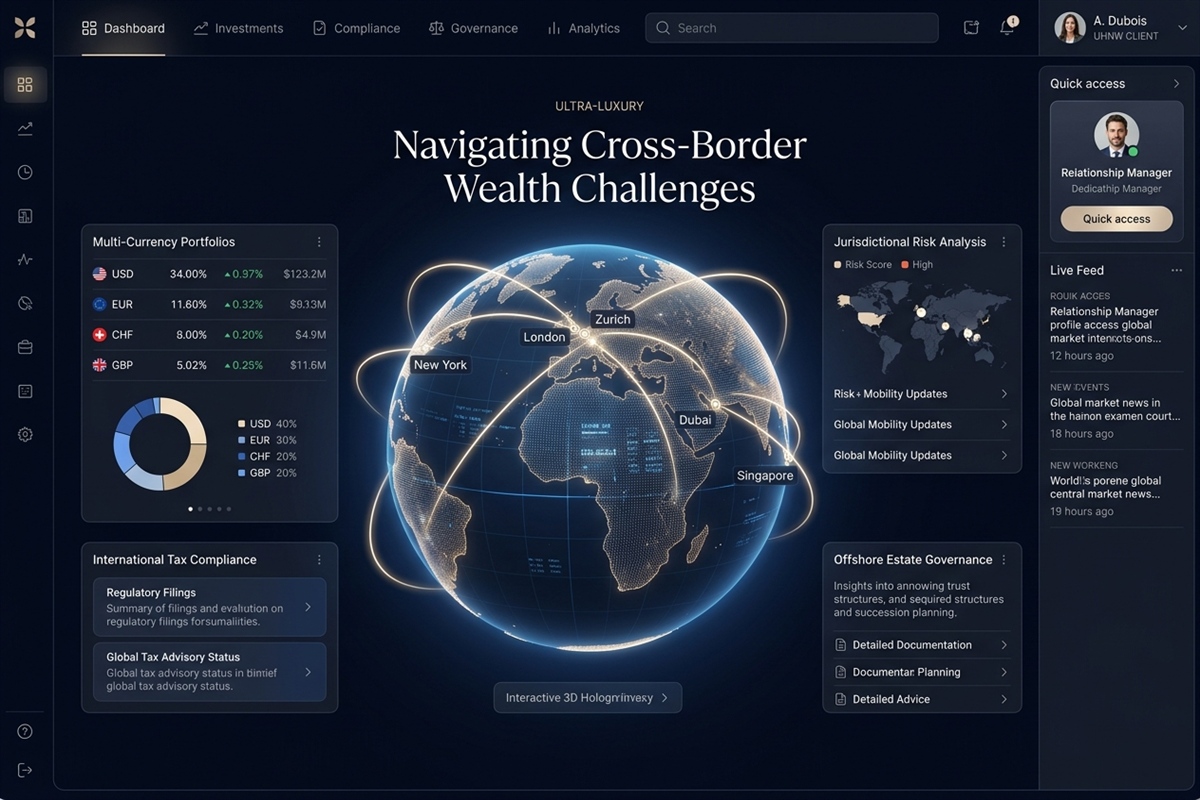
Navigating Cross-Border Wealth Challenges
The evolution of cross-border wealth management has been shaped by historical shifts in global finance and policy. Historically, the liberalization of financial markets in the latter half of the 20th century paved the way for increased capital mobility, leading to the current scenario where assets are often spread across continents. The emergence of international financial centres, like London and Singapore, has facilitated this growth, offering sophisticated services tailored to the needs of UHNWIs.
A prominent case study is the rise of family offices, which have become integral in managing cross-border wealth. Family offices provide bespoke services, including investment management, estate planning, and philanthropic advice, ensuring that the unique needs of UHNWIs are met. For example, the Al-Futtaim family office, based in Dubai, manages a global portfolio, exemplifying the strategic navigation of cross-border investments.
Trends in global wealth distribution show that assets are increasingly held in diverse locales. Recent data indicates that Asia-Pacific is witnessing the fastest growth in UHNWIs, driven by economic expansion and burgeoning entrepreneurial ventures. Such trends underscore the necessity for adept management of wealth across various jurisdictions, taking into account differing regulatory and tax environments.
Key Trends
- According to Knight Frank’s Wealth Report, nearly 25% of UHNWIs plan to invest in overseas real estate within the next year, indicating a strategic diversification of asset portfolios across borders.
- The OECD’s Automatic Exchange of Information (AEOI) initiative has led to increased transparency and compliance demands, affecting how wealth is managed globally.
- Currency fluctuation remains a significant concern, with many UHNWIs employing hedging strategies to mitigate risks associated with volatile foreign exchange markets.
- Digital assets are becoming a pivotal component of cross-border wealth, with a reported 10% of UHNWIs holding cryptocurrencies or blockchain investments as part of their portfolios.
- Environmental, Social, and Governance (ESG) criteria are increasingly influencing investment decisions, with cross-border implications as investors seek sustainable opportunities worldwide.
Expert Perspectives
Dr. Emily Chan, a renowned economist specialising in international finance, states, “The complexity of cross-border wealth management lies in the diverse regulatory frameworks and tax regimes that vary from country to country.” This insight reflects the need for comprehensive and adaptable strategies to navigate these complexities effectively.
John Smith, CEO of Global Wealth Advisors, highlighted, “With the rise of digital finance, UHNWIs are increasingly relying on fintech solutions to manage their assets seamlessly across borders.” His observation underscores the role of technology in facilitating efficient wealth management in today’s interconnected world.
According to Sarah Thompson, a legal expert in international tax law, “Estate planning for UHNWIs with assets in multiple jurisdictions requires careful consideration of tax implications to avoid potential legal pitfalls.” Her expertise emphasizes the importance of meticulous planning and compliance in safeguarding cross-border wealth.
Outlook, and Actionable Insights
Managing cross-border wealth effectively requires understanding the broader implications of financial decisions and staying ahead of emerging trends. Here are some actionable insights:
- Stay informed about changes in international tax laws and regulatory frameworks to ensure compliance and optimize tax efficiency.
- Consider employing a multi-disciplinary team of advisors, including legal, financial, and tax experts, to navigate the complexities of cross-border wealth management.
- Utilize technology and digital platforms to streamline asset management and enhance transparency in cross-border transactions.
- Adopt a proactive approach to risk management, incorporating hedging strategies and diversification to mitigate potential financial risks.
- Explore sustainable investment opportunities that align with ESG criteria, ensuring that cross-border investments contribute positively to global sustainability goals.
As global wealth continues to expand, the landscape of cross-border wealth management is poised for further evolution over the next three to five years. Experts predict an increasing reliance on artificial intelligence and machine learning to analyze financial data and optimize investment strategies. Additionally, the rise of digital currencies and blockchain technology is expected to revolutionize cross-border transactions, offering greater efficiency and security. Looking ahead, it is crucial for wealth managers to embrace innovation and adapt to the dynamic nature of global finance.
The management of cross-border wealth presents a unique set of challenges that require a nuanced understanding of global financial landscapes. As explored, trends such as increased transparency, digital finance, and sustainable investing are shaping the future of wealth management. Insights from experts like Dr. Emily Chan and John Smith highlight the importance of strategic planning and technological integration. Ultimately, effective cross-border wealth management demands adaptability, foresight, and a commitment to aligning financial strategies with global opportunities and challenges.